
Image optimization
Find oversized media; resize and compress where appropriate; consider WebP or AVIF; lazy-load below-the-fold images without delaying the primary hero image.
Help visitors reach your services, buttons and contact forms without unnecessary delays. If your WordPress website is slow on mobile or struggling with Core Web Vitals, Mandile SEO investigates the bottlenecks and scopes practical fixes around your actual setup.
Keep your current website where possible. We establish a baseline, identify priorities and review performance and technical SEO together—without promising a perfect speed score.
One-time cleanup: $1,000 · Scope and baseline confirmed before work · No guaranteed scores, rankings or lead counts.
ONE-TIME / SCOPED WORK
Optional care: $197/month, available only after completed cleanup.WordPress speed problems can come from images, scripts, plugins, servers or several issues acting together. Your written scope identifies which fixes are appropriate—not every technique below is necessarily included in every project.
Removing bloated scripts and page builders isn't only about test scores. It's a key step in turning Glendale search clicks into phone inquiries.
Find oversized media; resize and compress where appropriate; consider WebP or AVIF; lazy-load below-the-fold images without delaying the primary hero image.
Review page and object caching, content delivery network (CDN) configuration, compression and server response time. Choose tools that fit the actual host.
Identify render-blocking assets, unnecessary scripts, heavy page-builder output and font loading that slow the first view or user interactions.
Investigate expensive queries, background tasks, unused plugins and database bloat. Back up and test before any removal or cleanup.
Review compatible PHP versions, resource limits, caching support and hosting bottlenecks before recommending a paid hosting upgrade.
Check crawling, canonical URLs, redirects, mobile usability, internal links and appropriate structured data alongside performance.
PageSpeed Insights and Search Console help distinguish laboratory diagnostics from real-visitor performance. A good Core Web Vitals assessment uses field data at the 75th percentile when enough data is available.
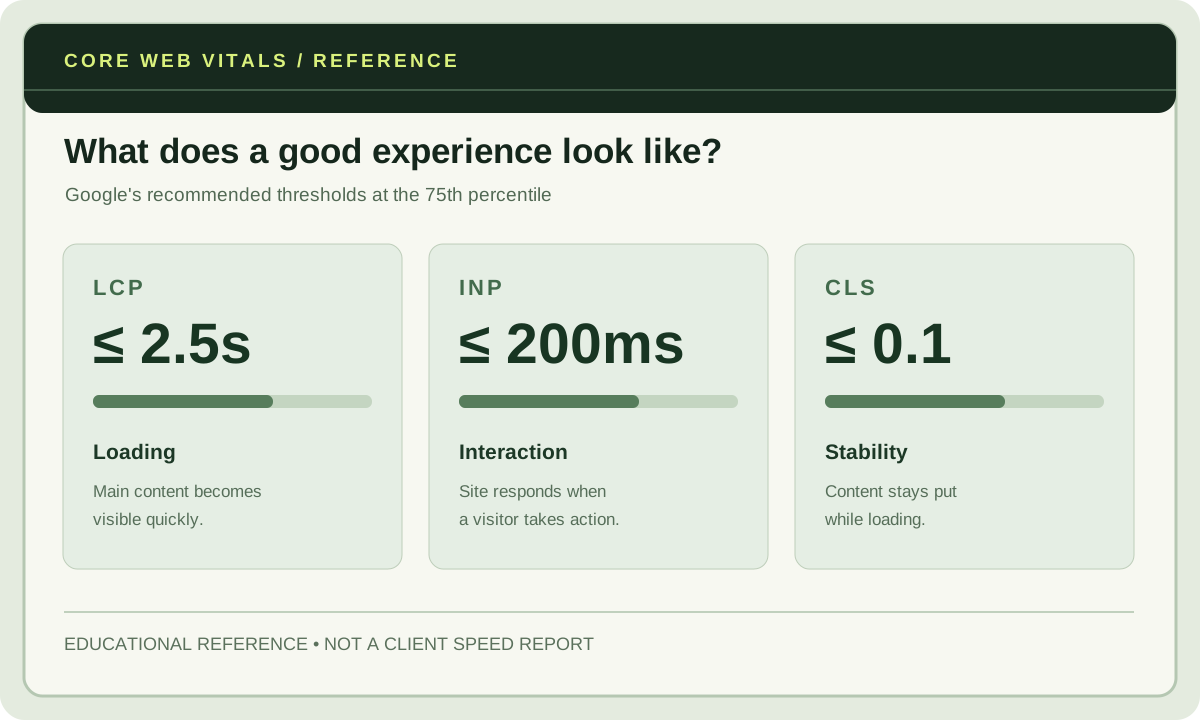
How quickly the main content becomes visible.
How responsive the page feels when someone interacts with it.
How stable the layout remains while the page loads.
These are Google's recommended “good” thresholds, not a guarantee that any given site will meet them after a cleanup. Some sites do not have enough field data for a page-specific Core Web Vitals report.
Review representative pages on mobile and desktop, record available PageSpeed and field metrics, and identify the slowest resources and interactions.
Confirm site access, backup and staging options, plugin/host compatibility, exclusions and the highest-impact work before changes begin.
Implement approved fixes, review broken layouts and functionality, compare the measurements and document anything that remains limited by the site or host.
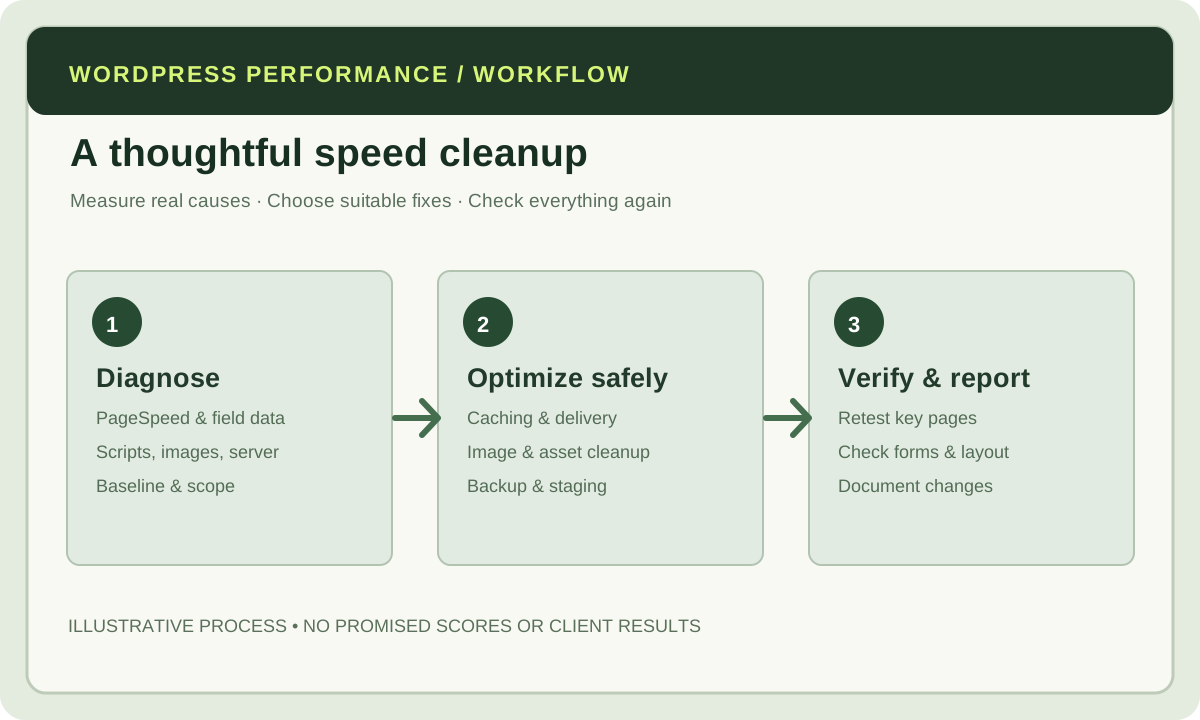
First measure the pages that matter and find the bottleneck. Common improvements include right-sized WebP or AVIF images, properly configured caching, fewer unnecessary scripts, faster server responses and carefully tested plugin changes. Do not lazy-load the main image that visitors need immediately.
We can investigate and optimize the causes of slow main-content loading, delayed interactions and layout movement. We measure changes where reliable data exists, but a passing Core Web Vitals result is not guaranteed.
Not necessarily. The right caching approach depends on your server, existing plugins and site features. We check your current setup before recommending another plugin, plan or provider. Installing multiple overlapping optimization plugins can cause conflicts.
Performance changes can affect forms, checkout, layouts and integrations. We plan backups, staging where practical, regression checks and a rollback path before making approved changes.
It is a one-time, scoped WordPress speed and technical SEO project. We review the baseline and agree in writing on the specific improvements, testing, access and exclusions before starting. Hosting, premium plugin licenses and recurring care are separately scoped when needed.
No. Optional WordPress-only care is offered only after a completed $1,000 WordPress speed and technical SEO cleanup. It is a separate maintenance service, not ongoing local SEO management.
For an eligible site with the necessary access, the standard monthly care scope includes review of WordPress core, theme and plugin updates; a backup check before significant changes; basic security, uptime and technical-health checks; checks that the contact form and key site functions still work; limited troubleshooting of maintenance-related issues; and a short record of checks, updates and outstanding items. Updates are assessed for compatibility and applied carefully rather than pushed blindly.
Hosting, domain, paid plugin licenses, malware cleanup, redesigns, major repairs, content production and ongoing search campaigns are not included. We agree on access, supported backups, troubleshooting limits and any separately billed work in writing before care begins.
Not automatically. The ongoing local SEO plan already includes basic technical SEO checks within its agreed scope. WordPress-only maintenance is a separate option only for additional upkeep that is not already included in the SEO agreement. We define responsibilities in writing so the same checks are not billed twice.
Send your WordPress website URL and describe what feels slow. We will confirm scope before any work begins.
After a completed $1,000 cleanup, optional $197/month WordPress-only care covers a monthly review of site health, updates, backup readiness, contact forms and maintenance-related issues—with documented changes and clear limits. It is not standalone care or a substitute for ongoing local SEO.
Ask about ongoing care